



How to Dry Your Car: 5 Myths That Leave Water Spots on Your Paint
Daniel von Detailing1 |


iK Sprayers "iK INOX" 10 Pressure Sprayer with Compressed-Air Valve for Solvents (Stainless Steel) - 10 liters is on backorder. As soon as everything in your order is back in stock, we ship it all in one go — delivery time follows whichever item takes longest.
Item added to your cart.
View cart


Do you have any questions or need help?
We are sure that our help page will help you. There you will find information on how to contact us and the relevant answers to frequently asked questions.
Didn't find what you were looking for? Write us a message in the chat.
Shipping to Belgium from € 6,90 with Bpost, DPD or FedEx, delivery time 1-4 days. Orders from € 179 ship free with DPD.
All shipping methods, weight tiers and express options are listed in our shipping policy.
Car Care Store in Nordhorn
Why wait when you can get it fast? Order your car care products from us online and choose between convenient pickup or our lightning-fast delivery, whether locally or throughout Europe. We are dedicated to offering you maximum flexibility and convenience so your car always stays in top condition.
You can always pick up your order from Tuesday to Friday, 10:00 to 17:00, at Bosinks Kamp 8 in 48531 Nordhorn at Detailing1. Please have your pickup confirmation ready. We look forward to your visit.
Couldn't load pickup availability

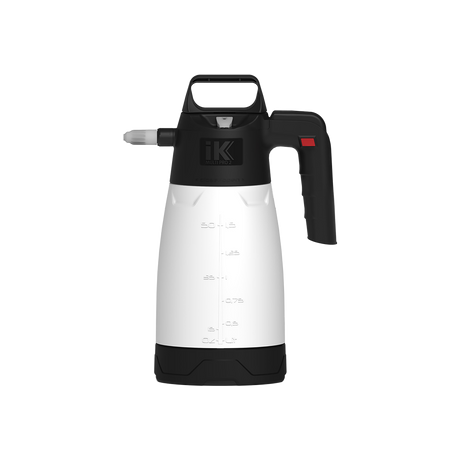
What is the iK Sprayers "iK INOX" 10? A pressure sprayer with a stainless steel tank and a compressed-air connector as standard, built for hydrocarbon chemistry: cold cleaners, degreasers, tar removers, mineral and vegetable oils. Not suitable for acids, alkalis, acetone or sodium hypochlorite. Alcohols only to a limited extent.
iK Sprayers "iK INOX" 10 is a solvent pressure sprayer from Goizper, with tank, lance and handle made from stainless steel. You build pressure with the hand pump or hook shop air to the connector in the lid; a safety valve caps it at 6 bar. Seals and materials are rated by the maker for mineral and vegetable oils, release agents, neutral cleaners and hydrocarbons.
What separates it from a polyethylene sprayer is not the tank, it is the seals. A hydrocarbon-based cold cleaner makes the wrong seal swell — it goes soft, loses its tension and the sprayer stops holding pressure. You rarely spot that while filling. You spot it mid-job, when the mist collapses and the pump runs dry.
Detailing1's tip from the shop: What we see day-to-day is that these sprayers get killed by one alkaline cleaner run "just this once". Acetone, caustic soda, potassium hydroxide and sodium hypochlorite all sit on not suitable for the stainless range. A single pass is enough to attack the seals, and the damage only shows up weeks later as lost pressure.
That is exactly why we keep getting questions about sprayers that "suddenly" stop holding. Keep one unit per chemical family and label it. And grease the moving parts of the pump every few weeks: the maker names that specifically as the way to extend seal life — it sits in the small print and almost nobody does it.
You fill through the wide funnel in the lid, parking the unscrewed pump chamber in its own holder while you do. Then you decide where the pressure comes from.
By hand: the base has two brackets you put a foot on while you pull the chamber. Without something to hold it down the unit walks, with a foot on the bracket you pump against your own weight and watch the gauge to see where you are. On air: open the connector in the lid, click the coupling on, done — shop air does the work and you never touch the pump for the whole fill.
Two nozzles come in the box. The adjustable cone covers panels when you want to wet an engine bay or an underbody evenly. The fan in the elbow works tighter, on edges, seams and wheel arches. The stainless lance is 50 centimetres, the hose 1.8 metres — together that gets you down a whole side of a car from where the unit stands, without dragging it along.
For longer walks you sling it over your shoulder on the strap. Because you are atomising solvents here, the maker shows the job done with a respirator, goggles and gloves throughout — with cold cleaner in an engine bay that is not a formality, it is the difference between breathing the mist and not. Don't spray in a draught or in full heat, or more product drifts off than lands.
The handiest detail is the one no product photo shows: the lance holder on the head doubles as a grip when you tip the tank to empty it. Getting ten litres of leftovers out under control, without hugging a wet tank, is exactly why that bar sits there. More units of this type are in the pressure sprayers category.
The stainless range is built for hydrocarbons and locked out of acids. The maker publishes that as a table, and it is clearer than any sales copy.
| Group | Examples | iK INOX |
|---|---|---|
| Aliphatic hydrocarbons | Heptane, hexane, pentane, decane | optimal |
| Aromatic hydrocarbons | Xylene, limonene, toluene up to 40 % | optimal |
| Oils and petroleum products | Mineral and vegetable oil, diesel, petrol, kerosene, white spirit | optimal |
| Mechanical load | High pressure, hot media up to 50 °C, weather | optimal |
| Alcohols | Ethanol, methanol, butanol | limited |
| Acids | Acetic, hydrochloric, phosphoric, nitric, sulphuric | not suitable |
| Alkalis and ketones | Acetone, caustic soda, potassium hydroxide, ammonia, sodium hypochlorite | not suitable |
In practice that means cold cleaners, solvent-based degreasers, tar and adhesive removers, release agents and oils are the core ground. Isopropanol mixes fall under "limited" — they destroy nothing, but seal life is shorter than with pure hydrocarbons, so we would not tie up a 246-euro unit for that.
There are four hard limits. First every acid, no exceptions and no percentage threshold. Second acetone, alkalis and sodium hypochlorite. Third a lot of halogenated solvents, which the maker rules out across the board. And fourth thick media: the sprayer handles thin release agents, not heavy grease and not tacky underbody coating.
Goizper also states plainly that given the spread of products on the market it guarantees no universal compatibility. When in doubt your chemical's data sheet decides, not the category — and if a chlorine or acid content shows up there, the product stays out.
That turns into a simple split. If your product is alkaline, so APC, wheel cleaner or pre-wash, it belongs in an alkali-resistant pressure sprayer with EPDM seals. If it is acidic you want the Multi range. If it is hydrocarbon-based the INOX is right — and if you only need a litre of that now and then, the 1-litre pressure sprayer carries the same chemical clearance.
The iK INOX 10 pays for itself when you wet surfaces regularly: engine bays, underbodies, suspension, wheel arches, shop floors. From that volume on, the tank buys back time.
A litre lasts a few minutes on surface work. Do an underbody from a 1-litre bottle and you spend half the job refilling and re-pumping — at ten litres with shop air both disappear. On top of that comes the clearance for media up to 50 °C: degreasers mixed warm cut faster, and the plastic ranges are only cleared for that to a limited degree.
Just as honestly the other way round: if you spray half a litre of brake cleaner twice a year, you do not need this. A solvent-resistant solvent pressure sprayer in bottle format costs a fraction and does exactly the same at that volume. The premium buys tank capacity, stainless steel, a gauge and shop air — not better atomisation on a one-litre job.
Against the 6-litre stainless model the maths is sober too. It handles the same chemistry and carries the same clearances. The compressed-air connector there is an extra though, while here it is standard. If you have shop air on the wall you effectively get the connector thrown in with the 10-litre — if you don't, the smaller unit saves you real money.
The tip that decides how long it lives is not on the box, it is in the maintenance notes: grease the moving parts of the pump regularly. The maker names that specifically as the way to extend seal life — and it is the step almost nobody takes between two jobs.
Together with two minutes of rinsing and bleeding the pressure before you put it away, that is the difference between a unit that lasts three seasons and one that weeps after a winter on a cold shelf. Blocked nozzles get flushed with water, never with wire or a needle — a widened orifice atomises worse forever. Store it frost-free between 5 and 30 °C.
Not sure about iK Sprayers "iK INOX" 10 Pressure Sprayer with Compressed-Air Valve for Solvents (Stainless Steel)? Get it explained:
A pressure sprayer whose seals and materials are rated for hydrocarbon chemistry rather than water or cleaners. The iK INOX 10 adds a stainless steel tank, a 50-centimetre stainless lance, a gauge and a safety valve capped at 6 bar. Ten of its thirteen litres are usable.
The compressed-air connector sits in the lid and comes as standard on the 10-litre model, while the 6-litre charges extra for it. You fill through the funnel, click the coupling on and spray the whole tank without pumping by hand. At 6 bar it flows 1.13 litres a minute.
The chemical family decides. iK Multi covers acids, iK Alk with EPDM seals handles alkaline cleaners like APC and wheel cleaner, iK HC and iK INOX take hydrocarbons. Only the stainless INOX range also carries top marks for high pressure, hot media up to 50 °C and weather.
Yes, as long as both are hydrocarbon-based — the maker lists white spirit, kerosene, diesel, petrol and aliphatic plus aromatic hydrocarbons as optimal. If the product contains acetone, acetates or any acid content, it stays out. When in doubt your chemical's data sheet decides, not the product category.
Both sit on not suitable for the stainless range. One pass rarely destroys anything you can see, but it attacks the seals — the failure turns up weeks later as lost pressure mid-job. Flush it several times with water straight away and have the seals checked.
After every job bleed the pressure, tip the leftovers out and rinse with water. Flush blocked nozzles with water only, never with wire — a widened orifice atomises worse for good. Pull the filter in the handle and rinse it when needed. Grease the moving parts regularly, which the maker says extends seal life.
Before you fill, check whether your product belongs to the hydrocarbon family. Cold cleaners, solvent-based degreasers, tar removers, release agents and oils are cleared; acids, alkalis, acetone and sodium hypochlorite are not. If the data sheet shows a chlorine or acid content, reach for a unit from the matching range.
Unscrew the pump chamber and park it in the holder on the head, then fill through the wide funnel in the lid. Ten litres maximum — the remaining three litres of volume are the air cushion that holds pressure across the fill. Drop the chamber back in and tighten it.
You have two ways to get pressure. By hand, put one foot on either of the two base brackets and pull the pump until the gauge shows working pressure. On air, open the connector in the lid and click the coupling on; the safety valve caps at 6 bar and pulls open to bleed off.
Take the adjustable cone for panels like an engine bay, an underbody or a shop floor, and the fan in the elbow for edges, seams and wheel arches. With a 50-centimetre lance and 1.8 metres of hose you work from where the unit stands; for longer walks use the shoulder strap. Because you are atomising solvents, a respirator, goggles and gloves belong to the job, and you don't spray in a draught or in full heat.
When you're done, bleed the pressure, tip the leftovers out using the lance holder as a grip and rinse with water. Accessories and alternatives from the range sit with the pressure sprayers.
Notes: This sprayer is built for thin media — heavy grease and tacky underbody coating will not go through the nozzle. Alcohols such as isopropanol are only cleared to a limited extent and cost seal life. Flush blocked nozzles with water only, never with wire or a needle, because a widened orifice atomises worse for good; pull the filter in the handle and rinse that too when needed. Grease the moving parts of the pump regularly, which the maker says extends seal life. Store it frost-free between 5 and 30 °C, and note that Goizper explicitly guarantees no universal resistance given the spread of products on the market.
Contact
Goizper Central Europe B.V.
Ambachtsweg 4, 4854 MK Bavel, Niederlande
https://iksprayers.com
Choose from many payment methods such as PayPal, Bancontact, iDEAL, Klarna, Apple Pay, Mastercard or Visa and benefit from pay later and instalment options. Your payment details are always processed securely. Questions about payment?
Your order reaches you from € 6,90 in 1-4 days with Bpost, DPD or FedEx. Orders from € 179 ship free with DPD. Questions about shipping?


iK Sprayers
iK Sprayers "iK Multi" TR 1 360° Sprayer (28/400)
Professional sprayer for versatile applications with 360° spraying


iK Sprayers
"iK e Foam" Pro 2 Electric Battery Foam Sprayer (built-in battery compressor)
Electric foam sprayer with high-quality foam
iK Sprayers
"iK Foam" Pro 2+ (Plus) Pump Foam Sprayer with Compressor Valve (incl. Colour Coding)
Professional pump foam sprayer for versatile cleaning tasks
iK Sprayers
"iK Foam" Pro 2 Pump Foam Sprayer (incl. colour coding)
Professional foam sprayer for versatile car care
iK Sprayers
"iK Multi" TR Mini 360º small spray bottle (28/400)
Efficient Spray Solution for Versatile Applications
iK Sprayers
"iK Multi" Pro 2 360° pressure sprayer (with colour coding)
Professional 360° pressure pump sprayer for versatile use
iK Sprayers
"iK Multi" TR 1 Spray Bottle (28/400)
Versatile and robust spray bottle for car care professionals
iK Sprayers
"iK Multi" Pro 2 Pressure Sprayer (incl. colour coding)
Resistant pressure sprayer
iK Sprayers
"iK Foam" 1.5 Pump Foam Sprayer
Professional Foam Sprayer for Car Care


iK Sprayers
"iK e Foam" Pro 12 Electric Pump Foam Sprayer (compressor included)
High-Capacity Electric Foam Sprayer with Versatile Foam
iK Sprayers
Spray Head "iK Trigger" Multi TR 1 360º (28/400) CHS-3AN by Canyon
Efficient car care with precise distribution and 360° design
iK Sprayers
iK Trigger Multi TR 1 (28/400) CHS-3AN spray head by Canyon
Versatile chemical-resistant spray head for precise applications
Daniel von Detailing1 |

Daniel von Detailing1 |

Jasper von Detailing1 |

Daniel von Detailing1 |

Daniel von Detailing1 |

Jasper von Detailing1 |

Daniel von Detailing1 |

Daniel von Detailing1 |

Daniel von Detailing1 |

Daniel von Detailing1 |

Daniel von Detailing1 |

Daniel von Detailing1 |