



5 Mistakes That Break Down Your Rain Repellent in Winter
From Thursday it's set to rain for four days straight, so the obvious move is to seal the windscreen today. That's exactly the right plan. The catch: a rain repellent applied in October often doesn't last six weeks, even though the bottle promises twelve months. The product is rarely to blame. It comes down to five mistakes that barely show in summer and suddenly matter once it's cold, wet and icy.
A rain repellent makes it through winter if it goes onto dry, degreased glass, is applied thin and buffed off clean, cures dry for at least twelve hours, and isn't then worn away by the ice scraper or harsh screenwash.
1. Damp glass stops the rain repellent from bonding at all
A rain repellent bonds chemically to the glass surface, and for that it needs dry glass: an invisible film of dew or condensation blocks exactly the spots where the coating is supposed to anchor.
At eight this morning, Nordhorn was sitting at 13 °C and 97 percent humidity. That puts the dew point at around 12.9 °C, practically on top of the air temperature. A screen that has cooled overnight picks up moisture at those values, even if it feels dry to the back of your hand. In autumn that's the norm well into the late morning.
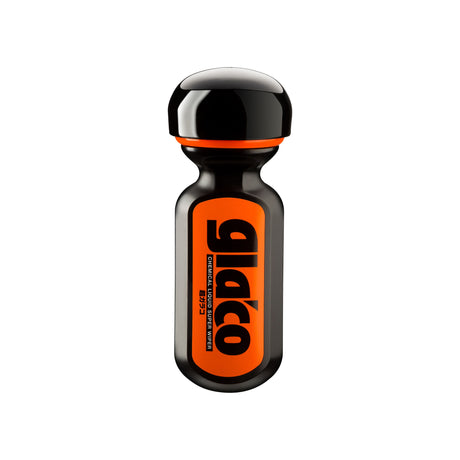
The manufacturers draw a clear line. Soft99 gives an ideal range of 15 to 25 °C for the Soft99 Ultra Glaco Glass Sealant and warns that below 10 °C the coating cures unevenly. The fluoropolymers need warmth to cross-link evenly on the glass. Cold, damp areas are left behind as islands where water later sits flat instead of rolling off.
The fix is all about timing. Today the forecast has the thermometer climbing to just over 20 °C, so your window is early afternoon. If you have a covered parking spot, move the car there half an hour beforehand so the glass and the air are at the same temperature. Right before you apply, wipe the screen over with a dry glass towel: if the towel picks up a damp sheen, it's still too early.
Almost everyone underestimates this at first, because you'd expect a wet screen to look wet. But a moisture film sitting right at the dew point is thinner than any visible droplet. It's not really an application error, it's a weather error, and you solve it by picking the right time of day.
2. An oily film under the coating costs months of durability
Any glass sealant only grips as well as the glass underneath is clean: silicone residue from the car wash, an old rain repellent or road film from exhaust fumes separates the new layer from the glass and knocks months off its lifespan.
Soft99 puts it in black and white in the Ultra Glaco instructions: without thorough prep, durability can drop by several months. That's why GYEON packs the prep straight into the kit. The GYEON Q² View EVO Rain Repellent Glass Coating 20 ml comes with a small bottle of Glass Polish that cleans and preps the surface for bonding in one go.
You can spot the oily film before it causes trouble. Mist some water onto the dry screen: if it pulls together into patchy islands and breaks apart in some places but not others, something is still sitting on the glass. Clean, untreated glass holds a continuous sheet of water. Untreated glass has a contact angle of about 20 to 30 degrees, so water spreads out flat, and that's exactly what you want to see before sealing.
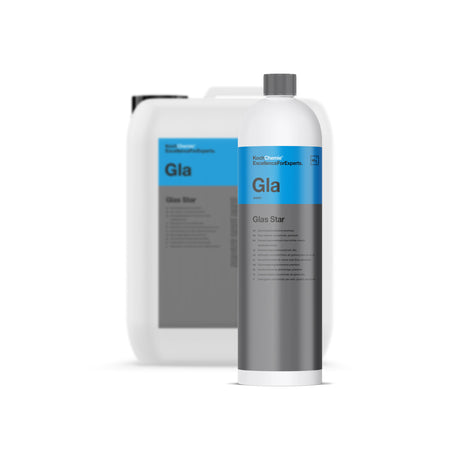
For the base clean, Koch-Chemie Glas Star "Gla" 1000 ml / 1 litre degreases the outside of the screen, then the Glass Polish from the kit goes on in small, overlapping passes. How stubborn that film can get and how to shift it in two steps is covered in detail in our post on the oily film on the windscreen.
Key point for winter: if you've run through a car wash with hot wax again this autumn, you've got exactly that film freshly laid down on the glass. Pre-cleaning then isn't an extra, it's half the job. Water spots that have already etched in won't come off with any glass cleaner; they need a glass polish before the sealant even stands a chance.

3. Residue you don't buff off smears at night against oncoming lights
Too much product or buffing off too late leaves a wafer-thin haze on the screen that you barely notice by day, but at night it shows up as smears and halos in the headlights of oncoming traffic.
Both big manufacturers set a tight window. GYEON lets the Q² View EVO flash for one to three minutes, then has you buff it off with a clean microfibre towel. With the Ultra Glaco you wait five to ten minutes until a slightly whitish haze forms on the glass, then take it off with a lightly damp microfibre. Nip off for a coffee in between and you'll be buffing against a dried-on layer.
The pro technique behind it is simple. You work section by section, so on a windscreen that means two or three sections rather than the whole thing at once. Apply in a cross-hatch pattern, first horizontal, then vertical, so there are no gaps. The towel for buffing off is lightly damp, not wet: a bone-dry towel drags on the residue and smears it, a wet one just moves it around.
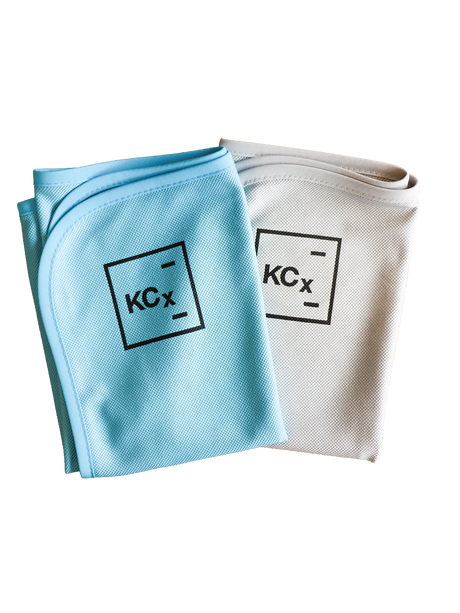
Do the final pass in straight lines. If a trace of film does stay behind, it lies evenly and doesn't form circular patterns that the wiper later traces out in arcs. A second, dry glass towel picks up the last marks at the end. The Koch-Chemie Pro Glass Towel 230GSM Microfibre Glass Cloth Blue + Grey / 60x40 cm comes as a pair for exactly that: one towel to buff off, one to finish.
More doesn't help here. The 20 ml GYEON bottle is enough for several coats on one car, and Soft99 reckons on up to five windscreens from 70 ml of Ultra Glaco. Lay down more and you don't get a thicker protective layer, just more residue to buff off.
4. Rain and wipers rub off the fresh coating
A fresh glass sealant isn't fully cross-linked once it's been buffed off: if rain hits in the first few hours or the wipers run across the screen, the soft layer gets partly stripped and leaves smears.
GYEON specifies at least one hour without water for the Q² View EVO and a full cure after 12 to 24 hours. According to GYEON, the wipers should only run after that, because using them too early causes smearing. Soft99 calls for at least twelve hours without moisture for the Ultra Glaco and explicitly recommends applying in the evening under cover and letting the coating cure overnight.
For this week that means: the window is open this afternoon, and the rain starts tomorrow morning. If you seal now, park the car under cover overnight, or at least wait until morning before the first drops fall. At 13 °C cross-linking tends to take longer than in high summer, so twelve hours is the minimum, not the comfort zone. There's more on how temperature and curing interact in our post on applying a rain repellent properly.
A second, often overlooked point: the car wash. Seal the screen and run it through a brush wash with hot wax two days later, and you've got friction and someone else's wax on a layer that can't take a beating yet. Day-to-day, detailers skip the car wash for the first two weeks after sealing and steer clear of aggressive cleaners.
Set the wipers to intermittent over these days, or leave them off while it's only drizzling. On the motorway the airflow does most of the work anyway: GYEON says rain is blown completely off the Q² View EVO from about 80 km/h.

5. Ice scrapers and harsh screenwash grind the coating away
In winter a rain repellent loses its effect less through rain than through friction and chemistry: the ice scraper on hard frost, wipers on an iced-up screen and alcohol-heavy winter screenwash wear the layer down week after week.
The good news comes straight from the manufacturer: frost doesn't cling as hard to a sealed screen, and according to Soft99 scraping is quicker and gentler. But that only works as long as you don't scrape the coating off yourself. Let the blower work on the windscreen for a few minutes before the scraper goes over it, and scrape in long, flat strokes instead of pressing hard on one spot. Only switch the wipers on once they're no longer frozen to the glass.
The screenwash question is a chemical one. Meguiar's notes that frequent washes with chemical cleaners, as well as strongly alkaline or acidic products, wear down a glass sealant over time. On top of that comes a winter effect that a lot of people mistake for a fading sealant: winter concentrates contain glycols so they don't evaporate straight away on cold glass. Mixed too strong, they leave a greasy film on top of the water-repellent layer. So mix the concentrate exactly as directed and with clean water.
That's exactly why GYEON designed the EVO update to cope better with modern screenwash fluids. For washing the screen by hand in between, the Soft99 Glaco De Cleaner Glass Cleaner does the job: it doesn't attack the existing Glaco coating and tops up a light beading effect every time you use it.
Soft99 is very precise about how to tell when it's time for a top-up. In the first four to six months, rain rolls off the Ultra Glaco from as low as 45 km/h. After about six months that threshold shifts to 60 to 70 km/h, and after a year you need 80 to 90 km/h. If you suddenly have to wipe again on a country road even though the screen is clean, the coating has worn thin.
To be straight about the limits: a sealant doesn't remove scratches, not even the fine arcs a dirty wiper drags into the glass. It just makes them a little less visible at night because the water rolls off over them. Real wiper scratches need a glass polish, and a wiper blade that's dragging grit around needs cleaning first. Two minutes running a damp cloth over the rubber edge is all it takes.
These five products get the coating through winter
Three things beat all five mistakes: clean glass, a sealant that matches the effort you're willing to put in, and a gentle cleaner for afterwards. The five products below cover exactly that chain.
The GYEON Q² View EVO is the more involved but longest-lasting option in the GYEON range. The SiO₂ layer drops the surface tension of the glass so far that water pulls into beads and slides off. For you that means: at motorway speed the screen stays clear without wipers. The Glass Polish comes in the kit. The limit: application takes patience, section by section, with a full overnight cure.
The Soft99 Ultra Glaco relies on fluoropolymers instead of silicon and comes with a built-in felt applicator. The fluoropolymer layer has extremely low surface tension, which is why water rolls off from as low as 45 km/h. Handy: for beginners it's the easier route, and 70 ml covers up to five windscreens. The limit: below 10 °C it goes on unevenly, so in winter only under cover or on a mild day.
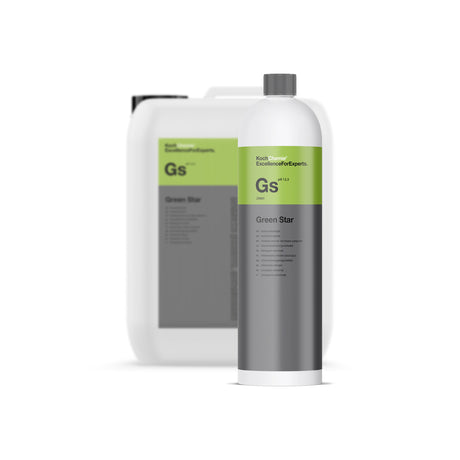
For prep, Koch-Chemie Glas Star "Gla" degreases the screen as a concentrate you mix to the strength you need. That way one litre stretches across a huge number of cleans. It won't shift etched-in water spot rings; that's not what it's made for.
For upkeep between sealant coats, the Soft99 Glaco De Cleaner works inside and out and is kind to Glaco coatings. It doesn't replace a sealant, it extends it. Add the towel pair Koch-Chemie Pro Glass Towel 230GSM for buffing off and finishing. You'll find more options from Glaco to Meguiar's in the Window sealing category, and matching cleaners under Glass cleaner.
If you only have time for the screen once a year and can use a covered parking spot, go for the Q² View EVO. If you want to be done quickly this afternoon without any tools, the Ultra Glaco is the more direct route. Either way: degrease, apply thin, buff off clean, let it cure dry overnight.

Detailing1-Insight: The most common reason we see for a rain repellent that starts smearing after a few weeks isn't the wrong product, it's a windscreen that wasn't truly dry when the product went on. At 97 percent humidity like this morning, the dew point sits almost on the air temperature, and a screen that's cooled overnight then holds a moisture film you can neither see nor feel. Our test before every application: drag a dry, grey glass towel across the screen once and hold it up to the light. If even one dark, damp streak shows, the sealant waits another hour.
No time for the whole post? Get it summarized: